
Why the Range Rover Velar and Evoque Are Built for Life in Montreal
July 17 2026,
Montreal's mix of narrow downtown streets, hills near Mont Royal, and long winters asks a lot of a vehicle. Two Range Rover models are built with exactly this kind of driving in mind: the Range Rover Velar and the Range Rover Evoque.
Both are compact luxury crossovers, but they take slightly different approaches to size, design, and everyday use. Here's a closer look at what makes each one a natural fit for life in Montreal.
What Makes the Velar Different
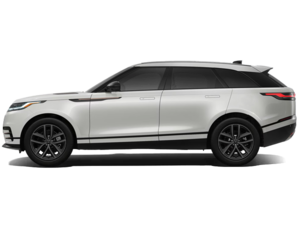
The Range Rover Velar sits between the smaller Evoque and the full-size Range Rover, giving drivers a bit more room without the bulk of the larger models. In Canada, the Velar is powered by the P400, a 3.0 litre six-cylinder Ingenium petrol engine producing 400 horsepower and 406 lb-ft of torque. It takes the Velar from 0 to 100 km/h in 5.5 seconds, with a top speed of 250 km/h, and pairs smooth six-cylinder power with genuine everyday usability.
- P400 engine: 3.0L six-cylinder, 400 horsepower, 406 lb-ft of torque
- 0-100 km/h in 5.5 seconds, top speed of 250 km/h
- Braked towing capacity of up to 2,500 kg when properly equipped
- Adaptive Dynamics suspension as standard for a controlled ride on Quebec roads
What Makes the Evoque Different
The Range Rover Evoque is the most compact model in the family, and its size shows where it matters most in the city: a tighter turning radius, easier parking, and a cabin that still feels upscale despite the smaller footprint. In Canada, the Evoque is powered by the P250, a 2.0 litre turbocharged four-cylinder engine producing 249 horsepower and 269 lb-ft of torque, taking the Evoque from 0 to 100 km/h in 7.6 seconds with a top speed of 230 km/h.
- P250 engine: 2.0L turbocharged four-cylinder, 249 horsepower, 269 lb-ft of torque
- 0-100 km/h in 7.6 seconds, top speed of 230 km/h
- Braked towing capacity of up to 1,800 kg
- Compact footprint built for tight city streets and easier parking
Winter-Ready Technology

Both models come standard with all-wheel drive, and both offer Adaptive Dynamics suspension, which reads wheel movement up to 500 times per second to respond to changing road surfaces. In snow and slush, this matters as much as it does on a dry highway on-ramp. The Velar also offers a Cold Climate Pack, adding a heated windscreen, heated seats, and a heated steering wheel to help each morning start a little easier through a Montreal winter.
Inside, both models share the Pivi Pro infotainment system, with a touchscreen that responds quickly to inputs and stays connected to a smartphone app for remote locking, vehicle status, and cabin preconditioning before you even step outside.
Two Different Approaches to Design
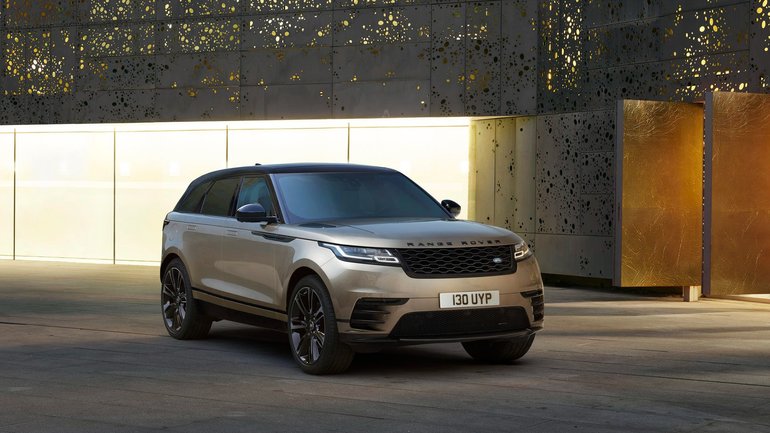
The Velar's design leans on reductive, minimalist lines, with flush deployable door handles and a low, wide stance that gives it a distinct road presence. The Evoque takes a more compact, coupe-like shape, with a rising beltline and a shorter overall length that makes it easier to thread through Montreal's older neighbourhoods and tighter parking garages. Both carry the same attention to cabin materials and finish, so the choice really comes down to how much size and presence you want on the road.
At a Glance
|
Model |
Best For |
|---|---|
|
Range Rover Velar |
Longer drives, more interior room, and six-cylinder P400 power |
|
Range Rover Evoque |
Tight city streets, the smallest turning radius in the family, and easy parking |
Learn More at Decarie Land Rover
Whether your daily drive takes you across the bridges into downtown or out toward the North Shore, one of these two models is likely built for the way you move through Montreal. Come visit our team right here in Montreal to learn more and see both models side by side.