
What Land Rover Intelligent All-Wheel Drive Means for Winter Driving
October 20 2026,
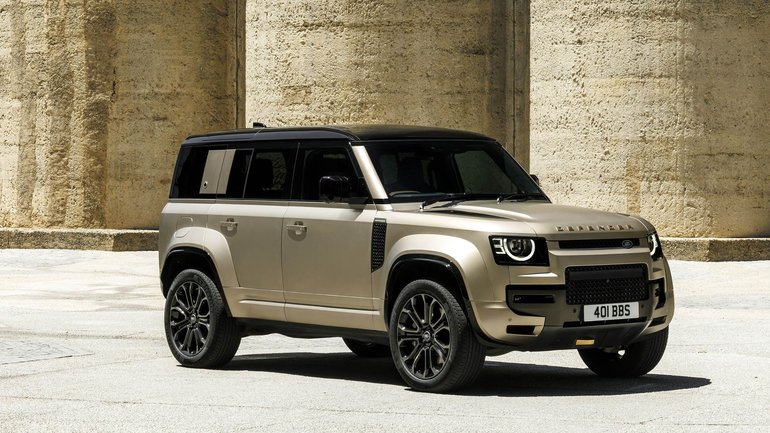
Snow-covered side streets, icy intersections and slushy highway ramps all test how well a vehicle finds grip. Land Rover has spent decades building vehicles for tough terrain, and that same engineering shapes how its all-wheel drive systems handle a winter commute.
So what is happening under your Land Rover when the road turns white? This guide explains how intelligent all-wheel drive works, how it reads changing grip, and which driver tools help you stay in control on snow and ice.
What Is Intelligent All-Wheel Drive?
Land Rover's intelligent all-wheel drive uses sensors to decide how much torque each axle needs, moment by moment. Torque is the turning force that moves your wheels. When one end of the vehicle finds less grip, the system can send more of that force to the end that has it.
Each Land Rover model uses its own version of this idea:
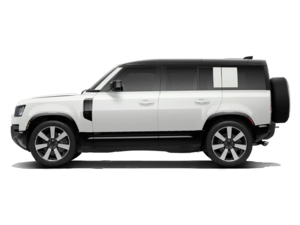
- Discovery Sport: Intelligent All-Wheel Drive is standard and balances torque between the front and rear wheels on slippery surfaces such as snow
- Discovery: an intelligent driveline uses a range of sensors to optimise the torque split between the front and rear axles
- Range Rover Evoque: torque on-demand all-wheel drive helps when pulling away from a standstill on slippery surfaces
- Range Rover and Range Rover Velar: all-wheel drive is managed by Intelligent Driveline Dynamics, explained below
How the System Reads the Road

Range Rover and Range Rover Velar use Intelligent Driveline Dynamics, or IDD, a control system developed in-house by Land Rover. On the Range Rover, IDD monitors grip levels and driver inputs 100 times per second. It then predicts where torque should go between the front and rear axles, and across the rear axle.
On the Range Rover Velar, IDD measures data such as steering wheel angle and throttle pedal position. From that, it estimates how much friction there is between the tires and the road. The Velar can shift torque to the front axle in as little as 100 milliseconds, and it can move from rear-wheel drive to fully locked all-wheel drive in only 165 milliseconds.
That speed helps the system respond to a slippery patch almost as soon as it begins, which keeps the vehicle steady and predictable under your hands.
Why Cold Temperatures Matter
The Range Rover's intelligent all-wheel drive can save fuel by disconnecting drive to the front axle at speeds between 35 km/h and 160 km/h. Cold weather changes that. All-wheel drive stays connected whenever the temperature is below 3°C. It also stays connected when you pull away from a stop and when you drive off-road.
That matters on cold mornings. Frost and black ice often form when temperatures sit near freezing, and the Range Rover keeps all four wheels ready to drive without waiting for you to press a button or change a setting.
Terrain Response 2 and Grass-Gravel-Snow Mode
All-wheel drive works hand in hand with Terrain Response 2. This system lets you choose a drive mode that suits the surface under your tires. It is available on Discovery, Discovery Sport, Range Rover Evoque, Range Rover Velar and Range Rover.
For winter, the key setting is Grass-Gravel-Snow. On the Range Rover Evoque and Range Rover Velar, each mode alters the calibration of the engine, transmission, all-wheel drive system, suspension and stability control for traction and composure. Select Grass-Gravel-Snow on a snowy street and your Land Rover adjusts these systems for the slippery conditions.
Prefer to let the vehicle decide? Auto mode on Discovery Sport, Range Rover Evoque, Range Rover Velar and Range Rover selects the most suitable setting on its own. Range Rover drivers can go further with Configurable Terrain Response, which lets you adjust the differentials, throttle, traction control and ride height, then save up to four custom profiles.
Extra Traction Helpers on Ice
Intelligent all-wheel drive is backed by a team of supporting systems. Here are the ones that matter most in winter:
- Active Locking Rear Differential: standard on Range Rover and available on six-cylinder Range Rover Velar models, it manages torque between the rear wheels to improve traction on slippery surfaces
- Torque Vectoring by Braking: brakes the inner or outer rear wheel to help control understeer and oversteer in corners
- Hill Descent Control: holds a steady, controlled speed on steep downhill slopes
- All Terrain Progress Control: sets and maintains a steady low speed in challenging conditions, so you can focus on steering
Winter Tires Complete the Picture

All-wheel drive helps you pull away and keep moving. Braking and steering depend on the grip your tires provide, so a full set of winter tires gives your Land Rover's driveline the traction it needs to do its job.
Pair winter tires with smooth steering, gentle braking and extra following distance. Together, they let intelligent all-wheel drive and Terrain Response 2 make use of every bit of grip the road offers.
Key Takeaways
|
Feature |
What It Means in Winter |
|---|---|
|
Intelligent all-wheel drive |
Sends torque to the axle with more grip on slippery roads |
|
Intelligent Driveline Dynamics |
Range Rover monitors grip 100 times per second |
|
Cold-weather AWD connection |
Range Rover keeps all-wheel drive connected below 3°C |
|
Fast torque shifts |
Range Rover Velar reaches fully locked AWD in 165 milliseconds |
|
Grass-Gravel-Snow mode |
Adjusts vehicle systems for snow and slush |
|
Active Locking Rear Differential |
Improves rear-wheel traction on slippery surfaces |
Feel the Difference at Décarie Land Rover
Curious how intelligent all-wheel drive feels on a snowy road? Visit our team right here in Montreal at Décarie Land Rover. We are happy to walk you through Terrain Response 2, explain how each model handles winter driving, and help you set up a test drive when you are ready.