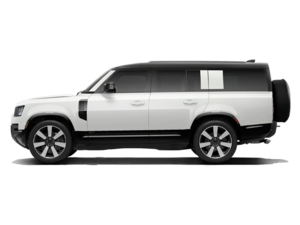

Defender 130 Outbound: How Land Rover's Longest Defender Solves Quebec's Seven-Passenger Adventure Challenge
February 13 2026,
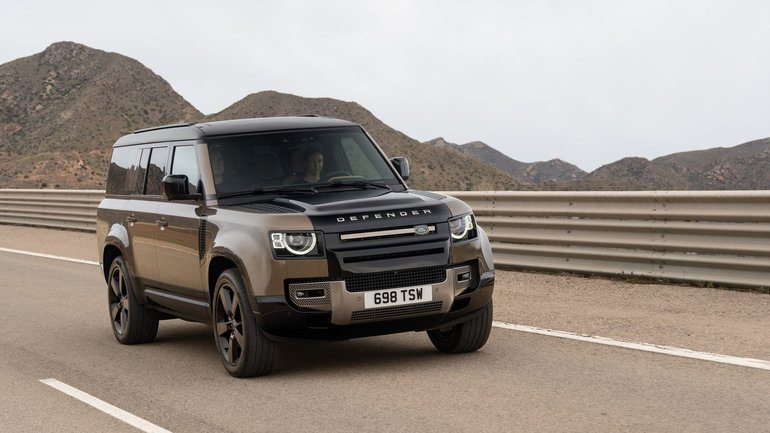
Quebec families requiring genuine off-road capability combined with seven-passenger capacity face a specific challenge. Most luxury three-row SUVs prioritize on-road comfort over terrain capability. The Defender 130 Outbound takes a different approach, building on the Defender platform's rugged foundations to deliver adventure-ready transportation for larger groups.
The Outbound variant within the Defender 130 lineup focuses on cargo volume optimization. Where standard Defender 130 models offer eight-passenger seating across three rows, the Outbound reduces seating to five and transforms the entire rear section into flexible loadspace. This configuration addresses the requirements of outdoor enthusiasts, overlanding adventurers, and families whose activities demand maximum equipment capacity.
The Defender 130 Platform Fundamentals
The Defender 130 extends the Defender 110's wheelbase to create additional interior volume. This lengthened architecture maintains the Defender's characteristic short overhangs while providing the interior space necessary for three-row seating or, in the Outbound's case, extensive cargo capacity.
Land Rover's D7x aluminum monocoque architecture provides the structural foundation. This construction method creates a body structure three times stiffer than traditional body-on-frame designs while reducing weight compared to steel alternatives. The architecture supports both electronic air suspension and coil spring setups, with the air suspension option providing variable ride height adjustment for different terrain and loading conditions.
Ground clearance reaches 293 mm in standard ride height, increasing when air suspension is raised to its off-road setting. This clearance works with approach angles of 29.0 degrees, breakover angles of 27.7 degrees, and departure angles of 27.0 degrees to allow the vehicle to navigate obstacles without contact.
Outbound Cargo Configuration Specifics
The Defender 130 Outbound removes the third-row seating and reconfigures the second row to maximize rear cargo volume. Total loadspace with the second row folded reaches 2,520 litres—the largest capacity in the Defender family. This volume extends 1,638 mm in length and 1,411 mm in width with a completely flat floor designed to accommodate camping equipment, sporting gear, and extended expedition supplies.
The configuration includes a distinctive robust panel that conceals the cargo area when loaded. This panel provides security for valuable equipment while maintaining the clean exterior appearance characteristic of modern Defender design. The wide tailgate opening provides unobstructed access for loading bulky items without wrestling with narrow openings or complex load-floor configurations.
Underfloor storage areas add practical capacity for smaller items that need separation from main cargo. The floor design incorporates tie-down points for securing loads during transit, preventing equipment shift during off-road maneuvering or emergency braking situations.
The ClearSight Interior Rear View Mirror addresses visibility challenges created by cargo loading. Even with the rear area completely filled, the digital mirror provides a clear rearward view by displaying a live video feed from a rear-mounted camera. This technology maintains safety standards regardless of cargo configuration.
Terrain Response 2 and Configurable Settings
All Defender 130 models, including the Outbound, feature Terrain Response 2 technology. This system adjusts throttle mapping, transmission shift patterns, differential settings, and suspension characteristics based on surface conditions. The system operates in automatic mode, detecting surface changes and adapting vehicle parameters accordingly, or in manual mode allowing drivers to select specific terrain programs.
For Quebec's varied conditions, several programs prove particularly relevant. The Grass/Gravel/Snow program optimizes traction on low-friction surfaces common during winter months or on cottage access roads. The Mud and Ruts program adjusts throttle response and differential lock behavior to maintain momentum through soft surfaces. The Sand program modifies these same systems for loose sand conditions found in some off-road recreation areas.
The Configurable Terrain Response feature allows experienced drivers to fine-tune individual parameters beyond the preset programs. Drivers can adjust throttle response aggressiveness, suspension firmness, steering weight, and stability control intervention level to match personal preferences or specific terrain requirements.
All-Terrain Progress Control acts as a low-speed cruise control system for off-road conditions. The driver sets a target speed between 1.8 km/h and 30 km/h, and the system maintains that pace while navigating obstacles, allowing full concentration on steering inputs. This feature reduces driver fatigue during extended technical sections.
Hill Descent Control manages speed automatically when descending steep grades. The system applies individual wheel braking to maintain a controlled descent without driver brake input, preventing wheel lock and maintaining steering control on slippery downhill sections.
Electronic Air Suspension Characteristics
The electronic air suspension fitted to most Defender 130 models provides variable ride height across five settings. Normal ride height balances ground clearance with highway stability. Off-Road height raises the vehicle 50 mm above normal to increase obstacle clearance. Off-Road+ raises an additional 25 mm beyond Off-Road height for maximum clearance during extreme terrain.
Access height lowers the vehicle 50 mm below normal to ease entry and exit for passengers and reduce the loading height for heavy cargo. Extended height automatically engages at highway speeds, lowering the vehicle 10 mm to improve aerodynamic efficiency and stability.
The Adaptive Dynamics system works with the air suspension to adjust damper firmness in real time. Sensors monitor body movement, wheel position, throttle input, and brake application 500 times per second. The system adjusts damper valves to reduce body roll during cornering while maintaining suppleness for isolated bumps.
For Montreal drivers dealing with degraded road surfaces, this system provides tangible benefits. The suspension can firm to control body movement over large road irregularities like frost heaves while simultaneously softening to absorb sharp-edged potholes without transmitting harsh impacts to the cabin.
Powertrain Options and Mild-Hybrid Technology

The Defender 130 offers several powertrain configurations. The base powerplant is a 2.0-litre turbocharged 4-cylinder mild-hybrid engine producing 296 horsepower. This engine incorporates a 48-volt belt-integrated starter generator that harvests energy during deceleration and uses that stored electricity to assist during acceleration, reducing the load on the engine and improving fuel efficiency.
For buyers requiring additional power, a 3.0-litre inline 6-cylinder mild-hybrid diesel engine delivers 296 horsepower with torque characteristics suited to towing and low-speed off-road work. The diesel's peak torque arrives at lower engine speeds compared to gasoline alternatives, providing stronger pulling power when climbing steep grades or accelerating with heavy trailers.
The V8 gasoline option produces 493 horsepower from a supercharged 5.0-litre engine. This powerplant reduces the 0-100 km/h acceleration time to 5.7 seconds while maintaining the towing capacity and off-road capability expected from the Defender platform.
All engines connect to an eight-speed automatic transmission with steering wheel-mounted paddle shifters for manual gear selection. The transmission features a two-speed transfer case providing both high-range and low-range gearing. Low range multiplies torque to the wheels, allowing the vehicle to climb steep obstacles at walking pace without clutch slip or excessive engine speed.
Comparison with Defender 110 and Discovery
Quebec families comparing the Defender 130 Outbound against other Land Rover models should understand the distinct positioning of each vehicle. The Defender 110 offers five-seat or optional six-seat configurations with moderate cargo capacity. Its shorter length improves maneuverability on tight trails and in urban parking situations, but limits third-row passenger space and cargo volume.
The Discovery provides seven-passenger seating with emphasis on passenger comfort and interior refinement. Its electronic air suspension tuning prioritizes on-road ride quality over maximum articulation capability. Cargo capacity with all seats in use reaches 157 litres, expanding to 1,179 litres with the third row folded and 1,794 litres with both second and third rows folded.
The Defender 130 Outbound splits the difference by maintaining Defender off-road capability while maximizing cargo volume for adventure equipment. Its 2,520-litre capacity with second-row seats folded exceeds the Discovery's maximum and provides a configuration the shorter Defender 110 cannot match.
For Quebec buyers whose priorities include cottage access via unmaintained roads, winter travel to remote ski areas, or camping expeditions to provincial parks, the Outbound's combination of terrain capability and cargo volume addresses specific needs that neither the Defender 110 nor Discovery can fully satisfy.
Interior Features and Technology Integration
Despite its cargo focus, the Defender 130 Outbound maintains the technology features found across the Defender range. The 11.4-inch Pivi Pro touchscreen provides central control for navigation, media, and vehicle settings. The interface uses a simplified menu structure requiring fewer touches to access common functions compared to previous Land Rover infotainment systems.
The 12.3-inch Interactive Driver Display replaces traditional analog gauges with a configurable digital screen. Drivers can choose between different information layouts, displaying navigation maps, media information, off-road data including pitch and roll angles, or traditional speedometer and tachometer graphics.
Climate control uses a four-zone system allowing independent temperature settings for driver, front passenger, and both sides of the rear seating area. Cabin Air Purification Pro monitors air quality and filters incoming air to remove particulates, dust, and allergens. For Montreal's urban environment where air quality can vary with traffic density and seasonal factors, this system maintains consistent interior conditions.
The Meridian surround sound system delivers 700 watts of amplifier power through multiple speakers positioned throughout the cabin. The system uses digital signal processing to optimize sound delivery based on seating position and cabin acoustics.
Wireless device charging keeps Qi-compatible smartphones charged without cables. Multiple USB-C ports throughout the cabin provide charging for devices not compatible with wireless charging. The electrical system also includes a household-style 110V power outlet, allowing the use of standard electrical devices without inverters.
Overlanding Equipment Integration
The Defender 130 Outbound specifically targets the overlanding community—adventurers who undertake extended off-road journeys requiring self-sufficient equipment. The vehicle's design accommodates the accessories required for this activity type.
The roof structure supports a maximum dynamic load of 168 kg when the vehicle is moving, allowing the mounting of roof boxes, kayaks, canoes, or other sporting equipment. When stationary, the static roof load capacity increases to 300 kg, sufficient for rooftop tents commonly used in overlanding.
The electrical system provides multiple power outlets supporting camp lighting, refrigerators, and communication equipment. The 12V outlets in the cargo area allow direct connection of accessories without running extension cords from the cabin.
The factory preparation for towing includes mounting points for hitches and electrical connections for trailer lighting. Maximum towing capacity varies by engine choice, with properly equipped models capable of pulling trailers up to 3,720 kg. This capacity accommodates utility trailers, camping trailers, boat trailers, and other equipment Quebec outdoor enthusiasts frequently transport.
Optional accessory packages add specialized equipment. Cross bars mount to the roof rails, providing attachment points for Yakima and Thule carrier systems. The Fixed Side Steps option provides secure footing when accessing roof-mounted equipment. The Raised Air Intake relocates the engine air intake to a higher position, increasing the maximum wading depth and reducing the risk of water ingestion during deep water crossings.
Winter Capability Considerations for Quebec
Quebec's winter conditions impose specific demands on vehicles. The Defender 130's capabilities address several of these challenges directly. The electronic air suspension automatically adjusts ride height based on temperature, compensating for the stiffening of suspension bushings and air springs in cold weather.
The heated windscreen uses thin heating elements embedded in the glass to clear ice and fog more quickly than traditional defrost systems. Heated washer jets prevent freezing of the windshield washer fluid as it exits the nozzles. Heated mirrors prevent ice buildup that would block rearward visibility.
The four-wheel-drive system with center differential and optional rear differential lock provides traction on snow and ice. The Terrain Response 2 Snow program optimizes throttle response and stability control intervention for low-friction surfaces. Traction control systems apply individual wheel braking to transfer torque to wheels with grip, allowing the vehicle to maintain forward progress even when one or more wheels lose traction completely.
For rural Quebec residents facing extended periods of sub-zero temperatures, the optional engine block heater provides a standard 110V connection for maintaining engine warmth overnight. This feature reduces engine wear during cold starts, improves fuel economy during warm-up, and ensures reliable starting in extreme cold.
Visit Décarie Land Rover in Montreal
Explore the Defender 130 Outbound at Décarie Land Rover in Montreal. Our team can provide detailed information about configuration options, accessory packages, and how this model compares to other Land Rover products for specific adventure requirements common to Quebec outdoor activities.