
Range Rover Velar Dynamic HSE vs. Discovery Metropolitan: Choosing Between Refined Design and Practical Versatility for Montreal Families
February 19 2026,
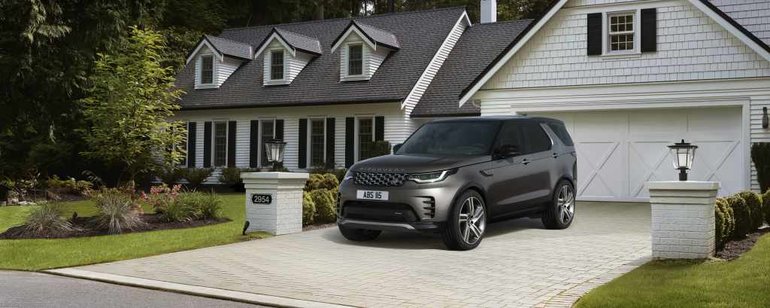
Montreal buyers considering Land Rover's mid-size luxury SUV segment face a decision between two vehicles that approach premium family transport from fundamentally different perspectives. The Range Rover Velar Dynamic HSE emphasizes visual sophistication and athletic road manners, while the Discovery Metropolitan prioritizes interior flexibility and family-focused practicality. Understanding how each model addresses Montreal's specific driving requirements helps clarify which vehicle better matches individual priorities.
Both vehicles occupy similar price territory and share Land Rover's core engineering, yet their execution diverges significantly in ways that matter for daily Quebec use.
Design Philosophy and Exterior Dimensions
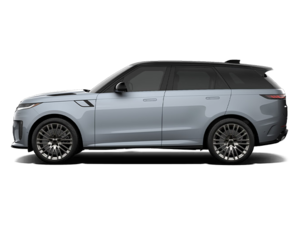
The Range Rover Velar follows Range Rover's modern minimalist design language. Clean surfaces, flush door handles, and restrained exterior detailing create what Land Rover describes as an "aristocratic appearance." The vehicle measures 4,797 mm in length and 1,665 mm in height (with panoramic roof), providing a lower, more horizontal profile compared to traditional SUV proportions.
The Discovery Metropolitan takes a more functional approach. Its 4,946 mm length and 1,820 mm height (standard ride height with air suspension) create taller greenhouse and more upright seating positions. The stadium seating arrangement—where each row sits slightly higher than the one in front—improves rearward visibility for all occupants while providing children with better forward sightlines during family trips.
For Montreal urban driving, the Velar's lower height makes navigating underground parking garages slightly easier, particularly in older facilities with restrictive clearances. The Discovery's additional height requires more careful attention in spaces with height restrictions but provides better over-hood visibility in dense traffic.
Interior Space and Seating Configurations
This is where the two vehicles diverge most significantly. The Range Rover Velar offers five-passenger seating exclusively. Rear legroom measures 1,016 mm, providing adults with adequate space during longer trips. Cargo capacity reaches 625 litres behind the second row, expanding to 1,693 litres with the rear seats folded.
The Discovery Metropolitan provides 5+2 seating, meaning five full-size seats plus two additional third-row positions suitable for children or occasional adult use. Maximum front-row legroom reaches 1,024 mm, with second-row passengers receiving up to 961 mm depending on adjustment. Third-row passengers get 864 mm of legroom—sufficient for children and acceptable for adults on shorter trips.
Cargo capacity varies dramatically based on seating configuration. With all seven seats in use, the Discovery provides 157 litres of cargo space. Folding the third row expands capacity to 1,179 litres. Folding both second and third rows creates 2,996 litres of loadspace—substantially more than the Velar's maximum.
For Montreal families with multiple children, the Discovery's third row provides practical value for school carpools, weekend activities, and extended family transportation. Families with one or two children may find the Velar's five-seat configuration sufficient while appreciating the lower cargo floor height for loading heavy items.
Towing Capability Comparison
Both vehicles offer substantial towing capacity, though with different maximum ratings. The Range Rover Velar Dynamic HSE can tow up to 2,400 kg when properly equipped with the towing package. The Discovery Metropolitan's maximum towing capacity reaches 3,500 kg with appropriate specifications.
This difference proves significant for Quebec buyers who trailer boats, campers, or equipment. The Discovery's additional 1,100 kg capacity allows for larger boat trailers, heavier camping trailers, or equipment trailers that the Velar cannot legally tow. Both vehicles include Advanced Tow Assist, which allows drivers to steer trailers using the rotary controller while reversing, and Trailer Stability Assist to manage trailer sway.
For Montreal families who occasionally trailer small boats or utility loads, the Velar provides adequate capability. Buyers with larger boats stored for summer use on the St. Lawrence or those planning to purchase camping trailers for Quebec provincial park exploration should consider the Discovery's higher towing rating.
Electronic Air Suspension Characteristics
Both vehicles feature electronic air suspension as standard or available equipment depending on trim level. The systems function similarly in principle but are tuned differently to match each vehicle's character.
The Velar's air suspension offers five ride height settings with a focus on on-road dynamics. Normal height provides the standard ride position. Access height lowers the vehicle 50 mm for easier entry and loading. Off-Road height raises 45 mm above normal. Extended height activates automatically above 105 km/h, lowering the vehicle 10 mm to reduce aerodynamic drag. Maximum off-road height adds another 25 mm beyond the standard off-road setting.
The Discovery's air suspension uses a similar five-height system but with slightly different tuning priorities. The suspension emphasizes maintaining level ride height when fully loaded with seven passengers and cargo, important for families using maximum seating capacity on longer trips.
Both systems include Adaptive Dynamics, which monitors body movement 500 times per second and adjusts damper firmness within milliseconds. For Montreal's pothole-challenged roads, this technology helps maintain ride comfort over sharp-edged pavement irregularities while controlling body motion during lane changes or emergency maneuvers.
Powertrain Options and Fuel Efficiency
The Range Rover Velar Dynamic HSE offers multiple powertrain choices. The base option uses a 2.0-litre turbocharged 4-cylinder mild-hybrid producing 246 horsepower. A 3.0-litre inline-6 mild-hybrid diesel delivers 296 horsepower with torque characteristics suited to towing. Higher-performance variants use a 3.0-litre inline-6 mild-hybrid gasoline engine producing either 335 horsepower (P340) or 395 horsepower (P400).
The Discovery Metropolitan comes standard with a 3.0-litre inline-6 mild-hybrid diesel producing 296 horsepower. This engine provides 900 Nm of torque, delivering strong pulling power for towing and highway merging. The inline-6 configuration offers inherently smoother operation than 4-cylinder alternatives while maintaining reasonable fuel consumption for a vehicle of the Discovery's size and weight.
For Quebec buyers, the diesel option in both vehicles provides several advantages. Superior fuel economy during highway driving reduces fuel costs on longer trips. Higher torque at lower engine speeds improves towing performance and provides better throttle response when passing on two-lane highways. The 48-volt mild-hybrid system reduces diesel's traditional noise and vibration characteristics, making modern diesel powertrains more refined than earlier generations.
Technology and Infotainment Integration

Both vehicles feature Land Rover's Pivi Pro infotainment system, though with different screen sizes. The Velar uses an 11.4-inch curved glass touchscreen. The Discovery also employs an 11.4-inch display. Both systems include dual eSIM technology, Software Over-The-Air updates, wireless Apple CarPlay, wireless Android Auto, and Amazon Alexa integration.
The Discovery Metropolitan includes additional family-focused technology. The available ClearSight Interior Rear View Mirror displays a rear camera feed even when the cargo area is fully loaded with passengers or equipment. This proves particularly useful with the third row occupied, as traditional mirror visibility becomes blocked. The system can toggle between mirror and camera modes as needed.
Both vehicles offer Interactive Driver Displays—12.3 inches as standard with optional upgrades. The displays show navigation mapping, media information, vehicle status, and configurable gauge layouts. Head-up displays are available on both vehicles, projecting speed, navigation, and safety information onto the windshield.
Versatility for Montreal's Seasonal Requirements
Quebec's seasonal extremes create specific requirements that influence vehicle suitability. Winter months demand heated surfaces, effective climate control, and adequate traction. Summer recreation requires cargo flexibility and towing capability. Both vehicles address these needs but with different emphasis.
The Velar includes heated windscreen, heated steering wheel, and heated front seats as standard or available equipment. The lower ride height and aerodynamic profile provide better highway fuel economy during winter commuting, though ground clearance in deep snow is slightly reduced compared to the taller Discovery.
The Discovery's greater height provides better snow clearance when navigating unplowed parking lots or cottage access roads. The third-row seating proves valuable during winter months when transporting children to ski hills or winter sports activities. Cargo capacity with the third row folded accommodates ski equipment for an entire family plus luggage for overnight trips.
During summer, the Discovery's higher towing capacity supports larger boat trailers for St. Lawrence recreation. The Velar's lower cargo floor makes loading beach equipment, bicycles, and camping gear slightly easier due to reduced lifting height.
Interior Materials and Refinement Levels
The Range Rover Velar Dynamic HSE emphasizes interior sophistication. Available Windsor leather, premium textile alternatives, and real wood or metal trim finishers create what Land Rover positions as a more refined cabin environment. The reductive design approach minimizes visible controls and switches, using digital interfaces to reduce visual complexity.
Sound insulation in the Velar receives particular attention. Acoustic laminated glass in the windshield and front windows reduces wind and traffic noise. Active noise cancellation uses microphones to detect unwanted sound frequencies and generates counteracting sound waves through the audio system speakers. These technologies create a quieter cabin environment during highway cruising.
The Discovery Metropolitan maintains high material quality while acknowledging its family-focused mission. Surfaces are designed to withstand the wear patterns created by children, sports equipment, and active lifestyles. Rubber floor mats, durable upholstery options, and thoughtful storage solutions reflect this practical orientation.
The Discovery includes multiple USB-C charging ports throughout all three rows, ensuring every passenger can maintain device charging during trips. The available four-zone climate control allows independent temperature settings for driver, front passenger, and both sides of the second row—useful for families where passengers have different comfort preferences.
Practical Decision Framework for Montreal Buyers
Montreal buyers should consider several specific factors when choosing between these vehicles.
Family size and seating requirements form the first consideration. Families with three or more children who need regular third-row access should strongly consider the Discovery. Families with one or two children where the primary adult drivers prefer more athletic road manners may find the Velar's five-seat configuration adequate.
Towing requirements create another clear decision point. Buyers who trailer boats over 2,400 kg or plan to purchase camping trailers in that weight range need the Discovery's 3,500 kg capacity. Families who occasionally tow utility trailers or smaller boats can work within the Velar's 2,400 kg limit.
Urban vs. suburban driving patterns affect the choice. Westmount or downtown Montreal residents who primarily drive on paved roads and value design sophistication may prefer the Velar. Families in Laval, the South Shore, or West Island who frequently travel to cottage country and need maximum versatility should consider the Discovery.
Budget considerations matter. While both vehicles occupy similar price ranges in base form, the Discovery Metropolitan includes more standard equipment targeted at families. The Velar Dynamic HSE's equivalent features often appear as optional packages, potentially increasing the final price.
Montreal Road Conditions and Suspension Tuning
Both vehicles handle Montreal's challenging road surfaces competently but with different characteristics. The Velar's suspension tuning emphasizes body control and precise handling. The setup maintains flat cornering attitudes and provides direct steering feedback. During spirited driving on Quebec's more enjoyable rural roads, the Velar delivers more engaging dynamics.
The Discovery's suspension prioritizes ride comfort and load-carrying capability. The system maintains composure when fully loaded with seven passengers and cargo, preventing the rear suspension from sagging or the vehicle from adopting a nose-high attitude. This proves valuable during family trips with maximum passenger and luggage loads.
For Montreal's deteriorated winter roads, both vehicles provide adequate protection from harsh impacts. The Velar's lower center of gravity reduces body motion over successive bumps. The Discovery's additional suspension travel absorbs larger irregularities without bottoming out.
Visit Décarie Land Rover in Montreal
Compare the Range Rover Velar Dynamic HSE and Discovery Metropolitan directly at Décarie Land Rover in Montreal. Our team can arrange test drives of both vehicles, explain specification differences, and provide information about current inventory availability and delivery timelines for your preferred configuration.