
Software-Defined Luxury: Understanding Land Rover's Advanced Electrical Architecture in 2026 Models
February 17 2026,
Montreal drivers shopping for luxury vehicles face a fundamental question that extends beyond traditional considerations like engine power or leather quality. Modern premium vehicles have evolved into sophisticated digital platforms where software capabilities define the ownership experience as significantly as mechanical engineering. Land Rover's 2026 model lineup introduces electrical architecture designed to improve over time through software updates, fundamentally changing the ownership proposition.
This shift toward software-defined vehicles affects how Montreal buyers should evaluate long-term value retention, feature availability, and the practical ownership experience across Quebec's diverse operating conditions.
Electrical Vehicle Architecture 2.0
Land Rover's Electrical Vehicle Architecture (EVA 2.0) serves as the digital foundation for all 2026 models sold in Montreal. This system coordinates communication between up to 80 electronic control modules (ECUs) depending on model and specification. These modules manage functions ranging from infotainment and navigation to powertrain calibration, suspension tuning, and safety systems.
The architecture uses dual embedded eSIM technology, providing two separate LTE cellular connections. This redundancy allows the vehicle to perform multiple functions simultaneously without bandwidth limitations. One connection can download a software update while the second maintains media streaming, navigation data, or connectivity for smartphone integration.
For Quebec drivers, this dual-eSIM configuration addresses a practical challenge. When traveling through regions with inconsistent cellular coverage—common when driving between Montreal and rural areas in the Laurentians or Eastern Townships—the system can switch between carriers to maintain the strongest available connection.
Software Over-The-Air Update Capability
The most significant implication of EVA 2.0 involves Software Over-The-Air (SOTA) updates. This technology allows Land Rover to modify vehicle software remotely, delivering new features, improving existing functions, and updating navigation maps without requiring dealership visits.
The number of updatable modules varies by model. Current Range Rover models support updates to 69 individual ECUs. Range Rover Sport enables updates to 63 modules. Discovery models allow updates to 44 modules. Discovery Sport similarly supports 44 updatable modules. These numbers reflect the complexity of each vehicle's electronic architecture rather than capability differences.
Updates download automatically when the vehicle detects available cellular service. The system notifies the driver through the touchscreen display when new software is ready for installation. Installation occurs when the vehicle is parked, locked, alarmed, and all windows are closed. Drivers can schedule installations up to 14 days in advance to ensure updates occur at convenient times.
The practical benefit for Montreal owners extends beyond convenience. Traditional vehicle software remains static throughout ownership unless manually updated during service appointments. Software-defined vehicles improve continuously. Features that didn't exist at purchase can appear months or years later. Existing functions can be refined based on user feedback and engineering improvements.
Pivi Pro Infotainment Evolution
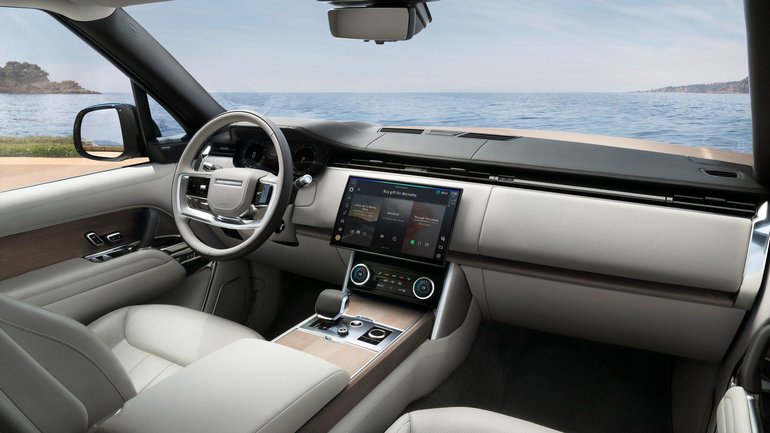
Land Rover's Pivi Pro infotainment system demonstrates the software-defined approach in daily use. The interface features an 11.4-inch curved touchscreen in most models, expanding to 13.1 inches in Range Rover and Range Rover Sport applications. The system incorporates a dedicated backup battery, allowing instant startup when the vehicle is started—navigation and media playback begin immediately without waiting for the main system to boot.
The backup battery also enables the eSIM connections to remain active even when the vehicle is off, allowing background software downloads to complete without depleting the main battery. For Montreal winters where vehicles may sit unused for extended periods, this separation prevents the complications traditional systems face when batteries discharge and lose memory settings.
Interface design focuses on reducing the number of inputs required to access common functions. Land Rover engineering data indicates approximately 80 to 90 percent of tasks require two touches or fewer from the home screen. Climate controls, audio volume, and Terrain Response mode selection remain permanently visible in sidebars, eliminating the need to navigate through submenus.
The homescreen uses a customizable three-panel layout. Users can arrange panels to prioritize frequently used functions. Pinch and swipe gestures work identically to smartphone interfaces, reducing the learning curve for drivers familiar with tablet computers or touchscreen mobile devices.
Voice Control Integration
All 2026 Land Rover models integrate Amazon Alexa voice assistant as standard equipment. This implementation differs from smartphone-dependent systems. Alexa functionality embeds directly within the vehicle's architecture, requiring only an Amazon account and cellular connection to operate.
For Montreal drivers, this integration addresses several practical scenarios. Verbal commands can adjust climate settings without removing hands from the steering wheel. Navigation destinations can be entered by speaking addresses rather than typing on the touchscreen. Media playback, phone calls, and even smart home device control become accessible through natural language requests.
The system also supports Land Rover's proprietary voice assistant, activated by saying "Hey Land Rover." This assistant understands commands in 31 languages and integrates more deeply with vehicle-specific functions like Terrain Response mode selection, suspension height adjustment, and detailed vehicle status inquiries.
Voice recognition technology accounts for regional accents and speech patterns. The generative AI processing allows the system to understand context and intent rather than requiring specific command phrasing. A Montreal driver can ask "How deep can I drive through water?" and receive the vehicle's wading depth specification, rather than needing to know the exact technical term or menu location for that information.
Navigation and Route Optimization
The integrated navigation system uses self-learning algorithms to recognize frequently traveled routes. Over time, the system identifies patterns in destination selection and can suggest routes even before a destination is manually entered. For Montreal commuters, this means the vehicle learns the typical morning drive to work and automatically suggests the fastest route based on current traffic conditions.
Dynamic guidance monitors real-time traffic data and proposes alternative routes when faster options become available. The system will suggest these alternatives through voice announcement or touchscreen notification, allowing the driver to accept or decline the recommendation.
Smart Voice Guidance recognizes when drivers are traveling in familiar areas and automatically silences turn-by-turn audio instructions to reduce cognitive load. The visual navigation display continues updating, but verbal prompts cease when the system determines they're unnecessary based on route familiarity.
The what3words integration provides precise location identification using a three-word address system. This technology proves useful in Quebec's rural areas where traditional street addresses may not exist or may be unclear. Parks, trailheads, cottage properties, and remote locations can be identified by their unique three-word combination, enabling accurate navigation to locations that GPS coordinates or conventional addresses handle poorly.
Connectivity Features for Quebec Climate

The electrical architecture includes specific provisions for cold weather operation. The system automatically adjusts various parameters based on ambient temperature to maintain optimal performance.
In freezing conditions, the navigation system modifies range calculations for plug-in hybrid and electric models to account for battery capacity reduction in cold weather. This ensures route planning reflects realistic charging needs rather than optimistic warm-weather projections.
The heated windscreen system—standard on most models—uses thin heating elements embedded in the glass. Unlike traditional defrost systems that blow warm air across the windshield surface, the heated windscreen clears ice and fog more quickly by heating the glass directly. For Montreal drivers facing morning frost during winter months, this reduces the time between starting the vehicle and achieving clear visibility.
Smartphone Integration Methods
Wireless Apple CarPlay and Wireless Android Auto come standard across the Land Rover lineup. Both systems integrate completely wirelessly, eliminating the need for charging cables cluttering the center console. The 15-watt wireless charging pad accommodates even the largest smartphones and includes active cooling to prevent overheating during extended charging sessions.
The wireless charging pad also incorporates signal boosting technology. This amplification improves cellular reception for phones placed on the charger, reducing dropped calls and improving data connectivity in areas with marginal cellular service—a practical benefit when driving through rural Quebec regions.
Bluetooth connectivity supports pairing two smartphones simultaneously. This allows a driver and passenger to maintain separate phone connections without manually switching between devices. Both phones can receive calls, though only one can stream media at a time.
Wi-Fi Hotspot and Data Connectivity
The embedded Wi-Fi hotspot supports connections for up to eight devices simultaneously. This capability transforms the vehicle into a mobile internet access point, useful for families where multiple passengers want to use tablets, laptops, or gaming devices during longer trips.
The data plan structure varies by market and should be confirmed at purchase, but typically includes an initial subscription period with the option to extend after expiration. Fair use policies may apply—some implementations reduce data speeds after consuming a specific monthly threshold, though this varies by region and plan structure.
For Montreal professionals who use travel time for productivity, the Wi-Fi hotspot enables laptop work, video conferencing, and large file downloads while commuting. The system maintains separate cellular connections for vehicle functions and hotspot data, preventing user devices from interfering with navigation updates or software downloads.
Interactive Driver Display Configuration
The 12.3-inch or 13.7-inch (depending on model) Interactive Driver Display replaces traditional analog gauges with a configurable digital screen. Drivers can select from multiple layout options using steering wheel controls.
Traditional analog layout mimics conventional speedometer and tachometer dial presentations for drivers who prefer familiar gauge designs. Full-screen navigation mode displays 3D mapping across the entire instrument panel, providing detailed turn-by-turn guidance directly in the driver's sightline. Hybrid layouts combine analog gauges with navigation data or media information.
The three-panel design philosophy extends to the driver display, creating visual consistency between the instrument panel and center touchscreen. This reduces cognitive load by maintaining similar information organization across both displays.
Head-Up Display Technology
Available as optional equipment on most models and standard on higher trims, the Head-Up Display projects key information onto the windshield directly in the driver's line of sight. The projection appears approximately two meters ahead of the driver, requiring minimal eye movement away from the road surface.
Displayed information includes current speed, speed limit recognition, navigation turn instructions, safety warnings, and selected gear. Brightness and position adjust automatically based on ambient light conditions and driver seating position.
For Quebec drivers, this technology proves particularly valuable during winter driving when frequent instrument panel glances can create safety risks on slippery roads. The head-up display reduces the frequency and duration of downward glances required to monitor speed and navigation.
Long-Term Value Implications
The shift to software-defined architecture affects resale value considerations in ways Montreal buyers should understand. Traditional vehicles depreciate primarily through mechanical wear and feature obsolescence. Software-defined vehicles can maintain feature relevance longer through continuous updates.
A 2026 Land Rover purchased in Montreal in February 2026 will receive feature additions and refinements through 2027, 2028, and potentially beyond as Land Rover continues developing new software capabilities. Features that don't exist at purchase—new connectivity services, enhanced driver assistance functions, navigation improvements—can appear through updates.
This ongoing development can slow the feature obsolescence that traditionally drives luxury vehicle depreciation. However, buyers should recognize that update support will eventually end. The specific support duration for 2026 models remains undefined as of the publication date, though Land Rover's public statements indicate a commitment to extended update support for EVA 2.0-equipped vehicles.
Privacy and Data Considerations
Software-defined vehicles generate substantial data about driving patterns, location history, feature usage, and vehicle operating conditions. This data enables the predictive and learning features that improve the ownership experience but raises privacy considerations.
Land Rover's privacy policy governs data collection and usage. Owners can review these policies and adjust data sharing preferences through vehicle settings or the Land Rover InControl app. Understanding what data is collected, how it's used, and what control owners retain over that data becomes more important as vehicles become more connected.
Montreal buyers should review these policies during the purchase process and adjust settings according to personal privacy preferences.
Visit Décarie Land Rover in Montreal
Experience Land Rover's software-defined technology at Décarie Land Rover in Montreal. Our team can demonstrate the Pivi Pro interface, explain Software Over-The-Air capabilities, and provide information about connectivity features specific to Quebec driving conditions.