
Range Rover Long Wheelbase Seven-Seat: Why Montreal's Executive Families Are Paying Attention
April 14 2026,
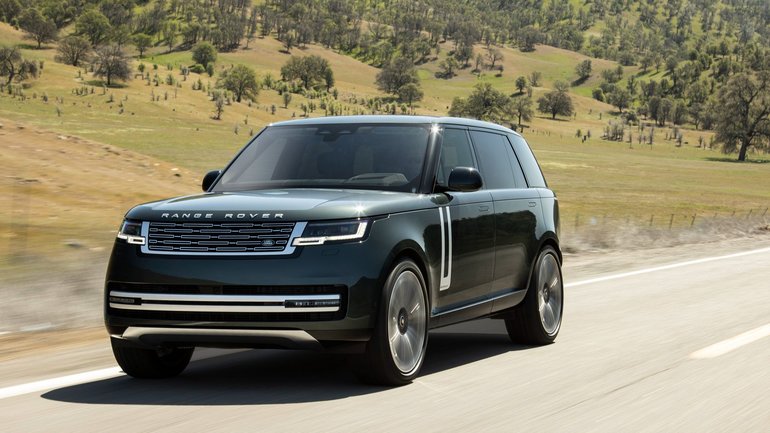
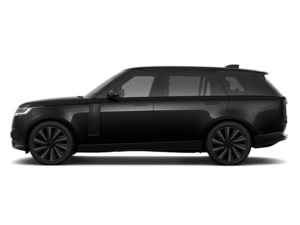
Most seven-seat luxury SUVs ask you to accept a trade-off. The third row gets the space, but it comes at the cost of rear-seat refinement, cargo volume, or the kind of ride quality that makes a long vehicle feel composed rather than cumbersome. The Range Rover Long Wheelbase (LWB) with seven seats was engineered to reject that compromise. It adds 200 mm to the wheelbase over the Standard Wheelbase model — stretching it to 3,197 mm — while keeping the same exterior design language, the same 900 mm wading depth, and the same drag coefficient of 0.30 that makes the Range Rover the most aerodynamically efficient vehicle in its class.
For families in Montreal who need genuine third-row comfort for adults alongside a cabin that functions as a mobile office during the week, the LWB seven-seat configuration answers a question that very few vehicles in this segment can: how do you seat seven people without compromising the experience for any of them?
Third-Row Comfort Built for Full-Sized Adults
The seven-seat layout is exclusive to the Long Wheelbase body. The third-row seats are heated, electrically fold flat into the boot floor, and deliver 864 mm of legroom — a figure that matches or exceeds the second row in many competing SUVs. The backrest angle is set at 25 degrees, the same as a second-row seat in several rivals, which means passengers in the third row sit upright and supported rather than cramped against the rear glass.
Stadium seating raises the third row 41 mm above the front seats, giving rear passengers a clear sightline forward and a connection to the rest of the cabin rather than an isolated rear compartment. Each third-row seat has its own device charging port, cup holder, and oddment stowage. The cabin lighting extends to the third-row armrests with the same 30-colour configurable ambient LED system used throughout the vehicle.
When the third row is not in use, the second-row seats slide backward to free up an additional 50 mm of legroom — useful for longer highway drives to Tremblant or Québec City where rear-seat passengers want to stretch out.
- Third-row legroom: 864 mm
- Third-row backrest angle: 25 degrees (equivalent to second-row seating in many competitors)
- Third-row height advantage: 41 mm above front seats (stadium seating)
- Third-row amenities: Heated seats, individual charging ports, cup holders, configurable ambient lighting
Second-Row Executive Class: Business-Grade Travel
The second row is where the Range Rover LWB separates itself most clearly from other seven-seat SUVs. Executive Class rear seats transform the five-seat configuration into a four-seat executive layout at the push of a button: a powered centre console deploys from the rear seatback, housing an eight-inch rear-seat touchscreen that controls the cabin environment. The heated and cooled rear memory seats offer four-way powered lumbar and headrest adjustment, and can recline up to 12 degrees.
For buyers who want more, Executive Class Comfort-Plus seats add Hot Stone Massage, heated door armrests, a heated centre console, and a calf rest. On a 90-minute drive from downtown Montreal to a meeting in Ottawa — or a Friday evening trip to a chalet in Sainte-Adèle — the rear cabin delivers a level of comfort that allows passengers to work, rest, or simply arrive without the fatigue that long drives typically create.
The LWB seven-seat model retains second-row legroom of 1,027 mm, which means the third row does not steal space from the row ahead. Four-zone climate control ensures every occupant can set a preferred temperature independently.
Cargo Volume: 312 Litres With All Seven Seats in Place

Cargo space is often the casualty of a third row, but the Range Rover LWB manages its packaging carefully. With all seven seats up, the boot holds 312 litres — enough for a pair of cabin cases, a pushchair, or a golf bag. Fold the third row flat and capacity rises to 1,061 litres behind the second row. Drop all rear seats and the loadspace reaches 2,601 litres (wet volume), with items up to two metres long fitting inside.
The practical two-piece split tailgate — a Range Rover feature since 1970 — remains standard. Five-seat LWB models add an Auto-Folding Loadspace Cover that retracts automatically when the upper tailgate opens. The Versatile Loadspace Floor hinges at its midpoint to create a vertical partition for smaller items, and flips backward to serve as a backrest when you sit on the lower tailgate.
|
Seating Configuration |
Cargo Volume (Wet) |
|---|---|
|
Seven seats upright |
312 litres |
|
Third row folded, five seats |
1,061 litres |
|
All rear seats folded |
2,601 litres |
Tailgate Event Suite: Outdoor Entertaining, Engineered
The Tailgate Event Suite is an optional feature that turns the rear of the Range Rover into an outdoor lounge. Activated through Pivi Pro, it opens the tailgate and redirects audio playback through the rearmost cabin speakers plus four dedicated tailgate speakers. Dimmable spotlights provide high-intensity task lighting — up to two hours on standard models, or up to 88 hours on Extended-Range Plug-in Hybrid models using stored battery power.
A pair of tailored leather cushion sets stow beneath the boot floor and deploy onto the lower tailgate and the Versatile Loadspace Floor backrest, providing comfortable seating for two. Sculpted cup rests in the lower tailgate complete the setup. For tailgating before a Montreal Canadiens game, a summer picnic at Parc Jean-Drapeau, or an afternoon at a vineyard in the Eastern Townships, it adds a practical layer of outdoor comfort that most SUVs simply do not offer.
Plug-In Hybrid: Electric Driving for the Weekly Routine
The Range Rover LWB is available with an Extended-Range plug-in hybrid powertrain. The P440e pairs a 3.0-litre six-cylinder Ingenium petrol engine with a 105 kW electric motor and a 38.2 kWh battery (31.8 kWh usable), producing 440 hp and 620 Nm of torque. It delivers a WLTP electric range of up to 100 km, with an expected real-world range of up to 80 km — enough for typical Range Rover owners to complete up to 75% of their trips using electric power alone.
The PHEV charges from 0 to 80% in under an hour on a 50 kW DC rapid charger, or from 0 to 100% overnight on a 7 kW home wallbox. For Montreal families whose weekday driving stays within the island — school drop-offs in Westmount, errands in NDG, a commute downtown — the electric range covers most of those trips with zero tailpipe emissions. The petrol engine provides full confidence for longer weekend drives without range anxiety.
Three driving modes — Hybrid, EV, and Save — let the driver manage battery usage. The Save mode preserves charge for a specific part of the journey, while Predictive Energy Optimisation uses navigation data to deploy electric power at the most efficient points along the route.
Range Rover LWB Seven-Seat Specifications
|
Feature |
Specification |
|---|---|
|
Wheelbase |
3,197 mm |
|
Overall length |
5,252 mm |
|
Third-row legroom |
864 mm |
|
Second-row legroom |
1,027 mm |
|
Wading depth |
900 mm |
|
Cargo (seven seats up) |
312 litres |
|
Cargo (all seats folded, wet) |
2,601 litres |
|
P440e PHEV output |
440 hp / 620 Nm |
|
WLTP electric range |
Up to 100 km |
|
DC rapid charge (0–80%) |
Under 1 hour (50 kW) |
|
Towing capacity |
Up to 3,500 kg |
Your New Range Rover LWB Is Waiting at Decarie Land Rover
The Range Rover Long Wheelbase with seven seats is built for the buyer who refuses to accept that carrying more passengers means accepting less comfort. Every row delivers a genuine Range Rover experience — from the Executive Class second row to the heated, stadium-style third row — and the plug-in hybrid powertrain keeps the weekly commute electric. Contact our sales team at Decarie Land Rover in Montreal to explore the LWB seven-seat configuration, test the Executive Class seating for yourself, and secure yours today.