
Terrain Response 2 Explained: How Land Rover's Drive Mode System Handles Quebec's Spring Conditions
March 10 2026,
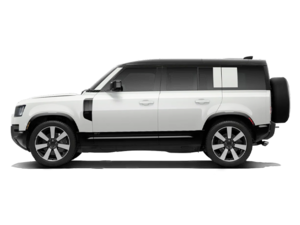
Quebec's spring driving season is one of the most variable in Canada. Within a single weekend trip north of Montréal, road surfaces can shift from cleared asphalt to loose gravel, standing water, soft mud, and frost-heaved pavement — sometimes all on the same route. Land Rover's Terrain Response 2 system is engineered specifically for this kind of unpredictability. Available across the Discovery, Range Rover, Range Rover Sport, and Defender families, the system continuously monitors driving conditions and adjusts the vehicle's throttle mapping, transmission shift points, traction control, and suspension settings to match the terrain underfoot.
For Quebec drivers heading into spring with cottage access roads, flooded low-lying sections, and post-winter gravel surfaces ahead, understanding how each Terrain Response mode works can make a real difference in confidence and comfort behind the wheel.
How Terrain Response 2 Works
Terrain Response 2 builds on Land Rover's original Terrain Response system by adding automatic surface detection. Rather than requiring the driver to manually choose a mode, the system uses sensor data from the wheels, driveline, and chassis to identify what surface the vehicle is crossing and applies the right settings in real time. Drivers can still select a mode manually using the centre-mounted rotary controller, but in Auto mode, the vehicle handles the decision-making on its own.
The system controls several vehicle functions at once: throttle sensitivity, gearbox shift speed and aggressiveness, differential behaviour, traction control intervention, and suspension stiffness (on models equipped with air suspension). Each Terrain Response mode adjusts these parameters as a coordinated package, so the driver experiences a single, predictable change in vehicle behaviour rather than having to manage multiple systems independently.
The Five Core Modes and When They Apply
General Driving is the default mode, calibrated for paved roads in dry or damp conditions. This is the setting most Montréal drivers will use for daily commuting on city streets and highways. Throttle response is linear, shifts are smooth, and traction control intervenes only when needed.
Grass, Gravel, and Snow adapts the vehicle for loose or slippery surfaces — the kind of conditions common on Quebec cottage access roads in April and May. The system reduces throttle sensitivity to prevent wheel spin on gravel, adjusts shift points for smoother low-speed progress, and increases traction control activity to keep all four wheels working together.
Mud and Ruts is designed for soft, low-traction surfaces where wheels are likely to dig in. The system allows more wheel spin than in other modes, using momentum to carry the vehicle through deep mud. It also adjusts the differentials and traction control to direct torque to whichever wheel has the most grip. This mode is especially useful on saturated Quebec trails after spring snowmelt.
Sand provides high-momentum driving on soft, deep surfaces. While less common in Quebec than in coastal or desert environments, this mode can be useful on soft riverbeds or sandy lakeside access points in the Outaouais or Laurentian regions.
Rock Crawl is calibrated for the slowest, most precise off-road driving over large obstacles. The system maximizes throttle precision, selects low-range gearing, and raises the suspension (on air-sprung models) to provide the greatest possible ground clearance. This mode is intended for serious backcountry terrain where careful wheel placement is essential.
Configurable Terrain Response: Fine-Tuning for Experienced Drivers
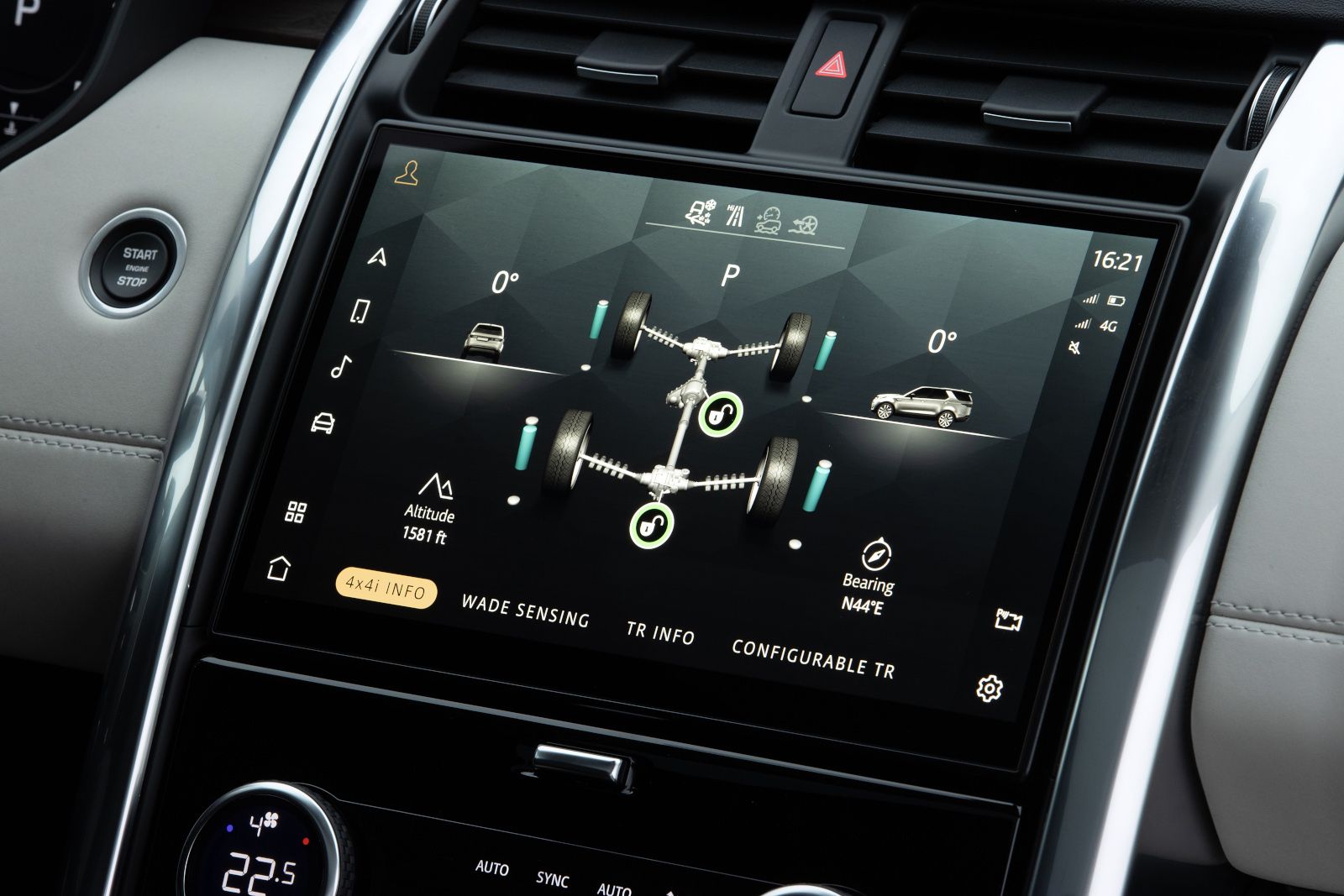
Available on select models and trims, Configurable Terrain Response goes beyond the five preset modes by allowing drivers to adjust individual vehicle systems independently. Up to four custom profiles can be saved, each specifying a different configuration level for the differentials, powertrain, steering, traction control, and ride comfort.
For Quebec drivers who regularly travel a specific type of terrain — a rocky cottage road, a muddy seasonal lane, or a frost-damaged rural route — Configurable Terrain Response lets them dial in settings that suit those exact conditions and recall them instantly.
ClearSight Ground View: Seeing What the Road Hides
Spring conditions in Quebec often conceal hazards — potholes hidden under standing water, rocks buried in soft mud, or erosion at the edge of a gravel road. ClearSight Ground View uses cameras mounted in the front grille and door mirrors to create a virtual view of the ground directly beneath the front of the vehicle, displayed on the central touchscreen at speeds up to 30 km/h.
This feature gives drivers a clear picture of what lies ahead without leaning out the window or relying on a spotter. During spring thaw, when standing water can disguise a deep pothole or a washed-out section of road, ClearSight Ground View provides the visual information needed to pick a safe line.
Wade Mode: Crossing Spring Floodwater With Confidence
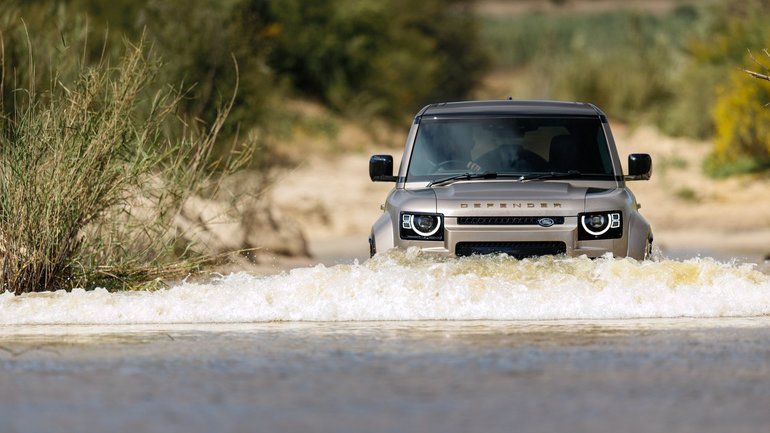
On models equipped with Terrain Response 2, Wade Mode activates a dedicated set of vehicle adjustments for water crossings. The system locks the driveline, raises the ride height to its maximum, and closes cabin air vents to keep water out of the interior. Wade Sensing provides real-time depth visualization on the Pivi Pro screen, showing the water level around the vehicle as it progresses.
When exiting Wade Mode, the system gently applies the brakes to wipe moisture from the friction surfaces, ensuring full braking performance is available immediately after a water crossing. On vehicles like the Discovery (900 mm wading depth) and the Defender (900 mm to 1,000 mm on the OCTA), this feature provides real utility during Quebec's spring flood season.
Key Takeaways
|
Feature |
What It Does |
|---|---|
|
Terrain Response 2 |
Automatically detects surface type and adjusts throttle, gearbox, traction, and suspension |
|
Five core modes |
General Driving, Grass/Gravel/Snow, Mud and Ruts, Sand, Rock Crawl |
|
Configurable Terrain Response |
Custom profiles for differentials, powertrain, steering, traction, and ride comfort |
|
ClearSight Ground View |
Virtual view beneath the vehicle on the touchscreen, up to 30 km/h |
|
Wade Mode |
Locks driveline, raises ride height, closes vents, displays water depth in real time |
|
All-Terrain Progress Control |
Maintains a set crawl speed (1.8–30 km/h) so the driver can focus on steering |
Learn More at Decarie Land Rover
Terrain Response 2 is one of those systems that works best when you experience it in context. Visit Decarie Land Rover in Montréal to learn how the system operates across different Land Rover models, and ask our team about which configuration options suit your regular driving routes in Quebec.