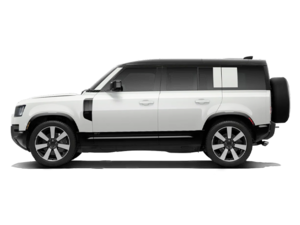

How the Defender 110 Handles a Summer Road Trip from Montréal to the Gaspésie
June 19 2026,
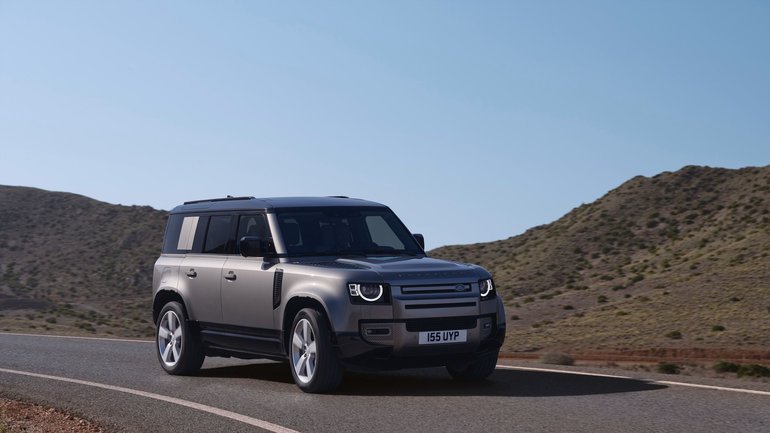
The Route 132 loop around the Gaspésie Peninsula is one of Québec's defining summer drives. From the South Shore bridge crossings east out of Montréal to the towering cliffs of Forillon, the gravel tracks cutting toward Parc de la Gaspésie, and the tidal flats that appear at low tide along the Baie-des-Chaleurs coast, the route tests a vehicle across nearly every type of surface a driver can encounter in one province. The Defender 110 is built for exactly this kind of journey.
This guide covers the Defender 110's specific capabilities — measured against the demands of the Gaspésie route — so drivers from Montréal can make a clear-eyed assessment before they load up and leave the island.
Roof, Tow, and Cargo: Loading Up for a Week
The first practical question on any summer road trip is how much you can carry. The Defender 110's dynamic roof load rating of 168 kg gives enough capacity for a rooftop tent and two passengers worth of sleeping kit — and once parked, the static roof load rating rises to 300 kg, so the tent holds while you sleep. A roof rack, kayaks, or a canoe carrier can all be mounted without approaching those limits under normal driving conditions.
Behind the side-hinged rear tailgate, the Defender 110 offers flexible seating configurations — five, six, or a 5+2 layout — so the same vehicle that carried seven people to Rivière-du-Loup can shed the rear jump seats on the return leg and gain a flat, purpose-built cargo floor. For drivers towing a trailer with a boat or additional gear, the Defender 110's maximum towing capacity is 3,500 kg, with Advanced Tow Assist to manage reversing manoeuvres when backing the boat into a launch at Percé or along the Matapédia Valley.
Defender 110 summer load summary:
- Dynamic roof load: 168 kg — enough for a rooftop tent and expedition gear
- Static roof load: 300 kg — holds the tent and occupants at camp
- Maximum towing: 3,500 kg with Advanced Tow Assist
- 5+2 seating configuration convertible to flat cargo floor
Wading: What 900 mm Means on the Gaspésie
Several of the Gaspésie's most rewarding access routes cross seasonal rivers or require driving through water to reach backcountry campsites and trailheads. The Defender 110's maximum wading depth is 900 mm. That number is supported by a dedicated Wade Mode within the Terrain Response 2 system, which locks the driveline, raises the ride height to its maximum position, and closes all cabin vents before the vehicle enters the water. The 3D Surround Camera with Wade Sensing displays the depth of water on the Pivi Pro touchscreen in real time, so the driver can monitor clearance throughout the crossing.
After the crossing, switching out of Wade Mode automatically applies the brakes lightly to wipe the friction surfaces clean — restoring full braking performance from the first pedal application on the far bank.
Terrain Response 2: From the Autoroute to the Gravel Track
The Gaspésie route is a study in surface variety. The first 400 km from Montréal is almost entirely paved autoroute, provincial highway, and village main streets. Once you turn north toward Mont-Albert or take the unpaved roads into the wildlife reserve, the surface changes to packed gravel, loose stone, and seasonal mud where the shoulder runoff crosses the track.
Terrain Response 2 handles this transition automatically in its Auto mode, reading conditions and recalibrating the throttle mapping, transmission, differentials, and traction control without driver input. Experienced drivers can dial in a custom Configurable Terrain Response profile — adjusting the differential behaviour, traction response, and ride height independently — and save it for specific conditions they encounter repeatedly. The All-Terrain Progress Control (ATPC) system sets and holds a crawl speed on challenging sections, allowing the driver to focus entirely on steering.

|
Capability |
Defender 110 Specification |
|
Ground clearance (off-road height) |
291 mm |
|
Approach angle (off-road) |
38 degrees |
|
Departure angle (off-road) |
40 degrees |
|
Breakover angle (off-road) |
28 degrees |
|
Maximum wading depth |
900 mm |
|
Maximum towing capacity |
3,500 kg |
|
Dynamic roof load |
168 kg |
|
Static roof load |
300 kg |
Winch: When the Road Ends and the Track Begins
The optional electric winch available for the Defender 110 provides 4,536 kg of maximum pull force and can be operated by remote control up to 45 metres from the vehicle. For drivers who plan to take logging roads or fire access tracks beyond the primary gravel network in the Réserve faunique des Chic-Chocs, this is a meaningful self-recovery tool — operable from outside the vehicle, without a second vehicle present.
Staying Connected on the Route 132
Mobile coverage along the Gaspésie coast is variable. The Pivi Pro infotainment system includes offline navigation that does not require a data connection to function, and what3words integration allows drivers to save and share precise three-word location addresses for campsites and access points — useful in areas where a standard postal address does not exist. The OnLine Pack with data plan provides a Wi-Fi hotspot for up to eight devices when coverage is available, and the 12V power socket in the cargo area charges equipment between stops.
Plan Your Departure from Montréal at Decarie Land Rover
Families and adventurers in Montréal planning a summer drive through the Gaspésie can explore the Defender 110 lineup, including available accessory configurations, at Decarie Land Rover. The team can walk you through roof load configurations, towing package options, and Terrain Response settings suited to your specific route. Stop in before the season starts.