

How Half a Century of Range Rover Design Still Shapes Every Vehicle at Decarie Land Rover
May 01 2026,
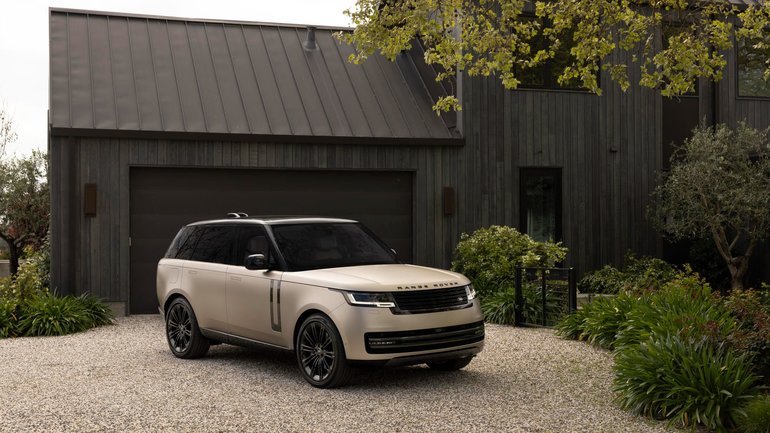
Every Range Rover built since 1970 shares a set of visual signatures that you can trace with your finger. The clamshell bonnet, which wraps over the top of the engine bay in a single piece, appeared on the very first model and has stayed on every generation since. The falling roofline, the strong horizontal waistline, and the lower rising sill line all work together to create a profile that tapers toward the rear — an almost teardrop shape that has defined this nameplate for more than fifty years. These are not nostalgic callbacks. They are active design principles that carry forward into every vehicle you see on the showroom floor at Decarie Land Rover in Montreal.
What makes this continuity worth examining is that it coexists with genuine modernization. The current fifth-generation Range Rover carries those three signature lines, yet its surfaces are stripped of ornament. Its shutlines are halved compared to the previous generation. Flush glazing, hidden-until-lit tail lamps, and a laser-welded roof joint create the impression that the body has been milled from a single block of aluminium. Chief Creative Officer Gerry McGovern has described this approach as a "modernist design philosophy, combined with over 50 years of evolution." For drivers in Montreal — a city recognized by UNESCO for its design culture — that tension between heritage and restraint is easy to appreciate.
The Three Lines: How Range Rover's Silhouette Stays Consistent Across Generations
The Range Rover's profile has always been governed by three lines. The falling roofline drops gently from the windscreen toward the rear, creating the floating-roof graphic that is emphasized by gloss black pillars. The strong waistline runs unbroken along the bodyside, anchored today by a hidden waist-rail finisher that removes the traditional trim piece where the door meets the glass. The lower rising sill line moves upward toward the rear, meeting the boat tail — a rear-end shape that tapers inward when viewed from above.
Together, these three lines give the illusion of converging at a point far behind the vehicle. This visual trick has been consistent since the original model, and it is what allows a 2026 Range Rover to be immediately recognizable even when parked next to its 1970 ancestor. The current model refines the execution further with a drag coefficient of 0.30, making it the most aerodynamically efficient vehicle in its class.
The Clamshell Bonnet: A Feature That Predates Most Modern SUVs
The clamshell bonnet is one of the oldest and most recognizable elements of Range Rover's design vocabulary. It first appeared in 1970 and has been carried through every subsequent generation. On the current Range Rover, the bonnet's shutline has been reduced to half the width of the previous model, extending into a single crease that runs the length of the vehicle and ends in an ingot shape at the rear quarter. That single line is the only feature line on the bodyside — everything else is clean surface.
This same principle extends to the Discovery family, where the clamshell bonnet joins other DNA cues such as the stepped roof and the prominent C-pillar. These shared traits connect the Discovery to the broader Land Rover lineage while giving it a distinct identity rooted in family versatility.
Flush Details and Hidden Technology: Where Heritage Meets Precision

Modern Range Rover design invests heavily in what is not visible. The flush deployable door handles, which retract at speeds above 8 km/h, eliminate interruptions to the bodyside surface. The signature side graphic — a design element present on Range Rover models for decades — is now machined directly into the body, sitting fully flush with the surrounding panels.
The hidden-until-lit tail lamps on the current Range Rover use surface LED technology that remains invisible when the vehicle is off, revealing a slim horizontal graphic only when illuminated. This approach, which McGovern's team calls "design-enabling technology," allows the brand to maintain its trademark visual restraint while integrating modern lighting performance.
For Range Rover Sport, the same philosophy applies with a more dynamic accent. The falling roofline is more aggressively raked, the shallow glazing is deeper into the body, and the overall stance sits lower and wider. These proportions have defined the Sport since its 2005 introduction and continue in its current generation, where a 23-inch wheel option and minimal overhangs reinforce that planted, road-focused character.
From Velar to Defender: How the Design Language Adapts
The Range Rover Velar pioneered the reductive design approach that now defines the entire Range Rover family. Its slim grille and flush door handles established design cues that were later adopted by the full-size Range Rover and the Range Rover Sport. The Velar's floating roof, continuous waistline, and 2,874 mm wheelbase give it proportions that balance formal elegance with a compact footprint suited to urban driving in Montreal.
The Defender takes a different path, keeping the clamshell bonnet but expressing its heritage through upright proportions and exposed structural elements. Its design recalls the utilitarian origins of Land Rover while incorporating modern engineering. The contrast between the Defender's bold geometry and the Range Rover's fluid surfaces shows how a single brand can speak two distinct visual languages, both rooted in the same foundational DNA.
Key Takeaways
|
Design Element |
Heritage Origin |
Current Expression |
|---|---|---|
|
Clamshell bonnet |
Every Range Rover since 1970 |
Shutline halved; single crease runs full body length |
|
Falling roofline |
Present across all five Range Rover generations |
Creates floating-roof graphic via gloss black pillars |
|
Horizontal waistline |
Core Range Rover proportion since the original |
Hidden waist-rail finisher for a clean door-to-glass join |
|
Flush side graphic |
Trademark feature across decades |
Machined into the body; fully flush with panels |
|
Flush door handles |
Introduced on Velar, adopted across lineup |
Retract above 8 km/h; reduce drag and clean the bodyside |
|
Boat tail rear |
Signature Range Rover rear-end taper |
Tapers in plan view; integrates split tailgate |
Learn More at Decarie Land Rover
More than five decades of design thinking are visible in every vehicle across the Range Rover, Defender, and Discovery lineups. To see how these heritage details carry into the current models — and to sit inside a cabin where every surface reflects that same design discipline — visit the team at Decarie Land Rover right here in Montreal.