

Five Reasons the 2026 Discovery Earns Its 3,500 kg Towing Rating for Quebec Cottage Season
March 03 2026,
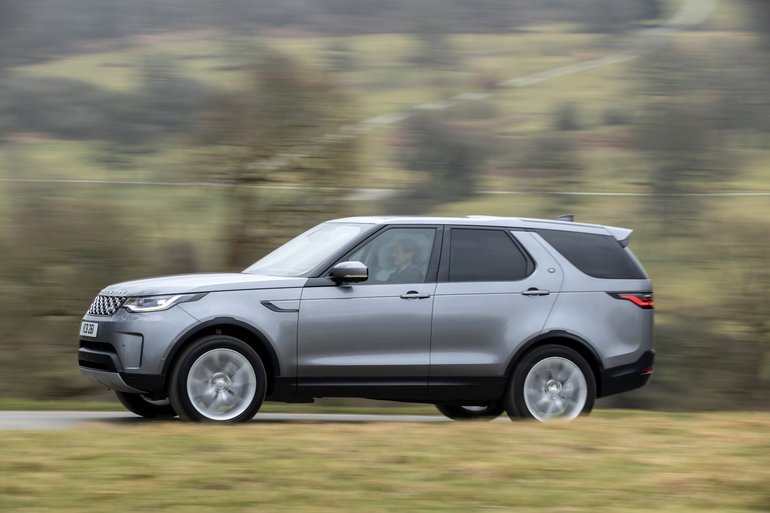
Cottage season in Quebec puts a towing vehicle to the test. Narrow launches at Lac Memphrémagog, winding gravel roads through the Laurentians, and loaded trailers on Route 117 North all demand a vehicle that can pull heavy and stay composed. The 2026 Discovery is rated at 3,500 kg of towing capacity — the highest in its class — and backs that number with specific engineering features designed to keep driver and trailer stable under real-world load. Here are five reasons that rating holds up when it counts.
For Quebec families preparing their boats, camper trailers, and utility loads for the spring, the Discovery offers a towing platform that goes well beyond a high number on a spec sheet. Every element — from the powertrain to the chassis to the driver-assistance technology — is tuned to make towing predictable and manageable, even for drivers with limited trailer experience.
- Powertrain Torque That Maintains Confidence Under Load
The 2026 Discovery is powered by a 3.0 L 6-cylinder Ingenium petrol engine (P360), producing 360 hp and 500 Nm of torque from 1,750 to 5,000 rpm. The 48V mild-hybrid system uses a belt-integrated starter motor and lithium-ion battery to assist the engine during acceleration and low-speed manoeuvring — moments when a loaded trailer demands the most from the powertrain.
That broad torque band matters on Quebec terrain. Pulling a boat trailer up a steep lakeside launch, merging onto the A-15 with a loaded camper, or climbing the long grades north of Saint-Sauveur all require sustained, mid-range power. The eight-speed automatic transmission adapts shift behaviour to driving style, selecting more assertive gear changes when the powertrain detects increased load.
- 360 hp and 500 Nm of torque from the 3.0 L 6-cylinder MHEV petrol engine
- 48V mild-hybrid assist for smoother low-speed towing and improved fuel efficiency under load
- Eight-speed automatic transmission that adjusts shift patterns when towing
- Advanced Tow Assist Takes the Stress Out of Reversing
Reversing a trailer into a tight cottage driveway or a boat launch ramp is one of the most stressful parts of towing. Discovery's Advanced Tow Assist allows the driver to steer the trailer using the Pivi Pro touchscreen and the Terrain Response rotary selector. Responsive trajectory lines appear on the screen via the rear camera, showing exactly where the trailer will go. The driver controls direction; the vehicle handles the steering inputs.
This system turns a multi-point reversing manoeuvre — the kind that causes lineups at busy Quebec boat ramps — into a controlled, single-input process.
- Trailer Stability Assist Monitors Sway in Real Time
Highway towing at speed exposes trailers to crosswinds, passing trucks, and road surface changes that can induce sway. Discovery's Trailer Stability Assist continuously monitors the vehicle and detects lateral movement from the trailer. When sway is identified, the system gradually reduces speed by cutting engine output and gently applying the brakes, restoring stability without requiring sudden driver intervention.
On Route 117 North or the A-40 through the St. Lawrence corridor, where wind gusts off open farmland can catch a high-profile trailer, this feature provides a critical safety layer.
- Air Suspension Adjusts for Loading and Launch Access
Discovery's standard air suspension can lower the rear by up to 60 mm for easier trailer hitching and loading. Once on the road, the system raises the vehicle back to standard ride height — or higher, depending on terrain. The Hitch Assist feature uses the surround cameras and the central touchscreen to guide the driver when lining up the tow bar with the trailer mounting point, while the Nose Load Measurement system verifies that the weight on the tow bar is within safe limits.
At a lakeside launch, the air suspension's lowering function makes it easier to connect to a boat trailer. On rough cottage roads, the raised ride height provides the 283 mm of ground clearance and 900 mm of wading depth that allow the Discovery to reach access points where paved roads end.
- Rear height lowering (up to 60 mm) for easier hitching
- Hitch Assist with camera-guided alignment on the touchscreen
- Nose Load Measurement to verify safe tow bar weight before departure
- Seven-Seat Interior Carries the Full Family and Their Gear
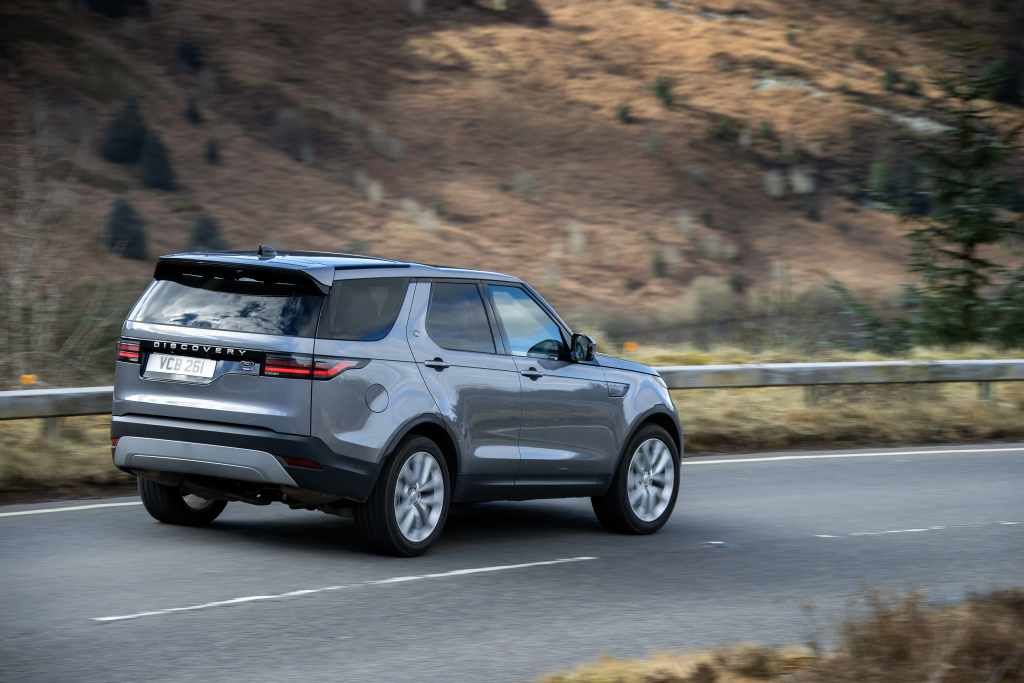
Towing is only one part of the cottage equation. The 2026 Discovery seats up to seven adults across three rows, with 258 litres of cargo space behind the third row — enough for coolers, bags, and essentials even when the full crew is aboard. With five seats in use, cargo volume expands to 2,485 litres. The Powered Inner Tailgate doubles as a bench for lakeside stops or as a restraint for loose items in the cargo area.
Click and Go tablet holders, a 4G Wi-Fi hotspot connecting up to eight devices, USB-A charging in each row, and three-zone climate control keep passengers occupied and comfortable on the long drive north. Cabin Air Purification Plus filters particulates and monitors CO₂ levels inside the vehicle, maintaining alertness for the driver during extended highway stretches.
Comparing the 2026 Discovery's Towing Capabilities
|
Feature |
Specification |
|---|---|
|
Maximum towing capacity |
3,500 kg |
|
Engine |
3.0 L I6 MHEV petrol, 360 hp, 500 Nm |
|
Advanced Tow Assist |
Touchscreen-guided trailer steering while reversing |
|
Trailer Stability Assist |
Automatic sway detection and speed reduction |
|
Hitch Assist |
Camera-guided tow bar alignment |
|
Nose Load Measurement |
On-screen weight verification |
|
Wading depth |
900 mm |
|
Cargo volume (5 seats / 7 seats) |
2,485 L / 258 L |
|
Seating |
Up to 7 adults across three rows |
Your New Discovery Is Waiting at Decarie Land Rover
The 2026 Discovery is built to handle the full scope of Quebec cottage season — from heavy towing to rough road access to carrying seven passengers in comfort. Contact the sales team at Decarie Land Rover in Montréal to discuss which powertrain and trim matches your towing needs, and schedule a test drive before the season begins.